
1.2. Structure of the WEFeF 2.0
The WEFeF 2.0 is a conceptual and methodological framework to identify and assess interventions in a context-specific manner.
The framework has been iteratively developed and tested by researchers and practitioners from various Mediterranean countries within the BONEX project (Boosting Nexus Framework Implementation in the Mediterranean, https://bonex-prima.eu/).
The WEFeF 2.0 is structured in five phases:
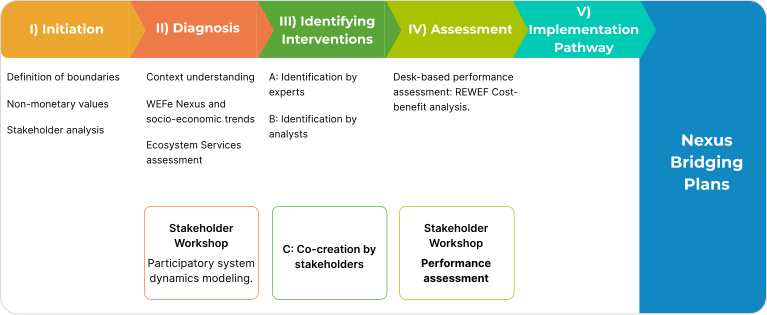

Initiation Phase
Initiating the implementation of the WEFe Framework 2.0. by conducting three main methodological steps: Defining the boundaries of the system under study, analysing stakeholders, and optionally evaluating non-monetary values tied to ecosystem services.

Diagnosis phase
Identifying, understanding and “diagnosing” the underlying causes of WEFe nexus challenges within the system. The WEFe nexus problem can encompass the biophysical and ecological, as well as the socio-economic dimensions of the focal area. Methodological steps include a context scan, assessing the WEFe nexus and socio-economic trends, conducting a stakeholder workshop for participatory system mapping, and if necessary, reconsidering system boundaries.

Identifying interventions phase
Identifying possible solutions, whether technical, organizational, or governance-related, to address diagnosed problems. To identify and shortlist different interventions, three different methodological approaches can be selected: Identifying interventions by regional and/or local experts, by analysts, or by stakeholders through a co-creation process.

Assessment phase
Evaluating the different interventions by assessing their potential performance, including impacts on Ecosystems Services, identifying barriers and facilitators to the implementation of the intervention, and analysing the facilitation of the implementation.

Implementation pathway phase
This phase shall define specific actions, responsibilities, key actors and resources needed to implement the selected intervention. It may also identify other initiatives to align with or build upon them as well as the necessary alliances to tap into identified opportunities and reduce conflicts.
An important outcome of implementing the WEFeF 2.0 will be a context-specific implementation pathway, called Nexus Bridging Plan (NBP).
These NPB summarise:
- the main insights and conclusions obtained from conducting the different WEFeF methods
- outline the steps, resources and actors that are required for a successful future implementation of the intervention
- corresponding policy measures in the area, with the overarching aim to improve problems related to the WEFe nexus in the area.
Conceptually, the WEFeF 2.0 adopts a:
Multi-scalar social-ecological-technological systems approach
Addressing the interlinked nature of human and natural systems. It builds on the Social-Ecological Systems (SES) Framework, developed by Elinor Ostrom (2007), which allows researchers to analyse how ecological and social systems interact within specific contexts, and shape system performance.

Systems thinking
Which serves as a holistic tool for addressing complex societal challenges. Systems are understood as interconnected elements that generate distinct behavioural patterns over time (Meadows 2009). This approach helps in understanding the dynamic interrelationships between system components and their drivers.
In the WEFeF 2.0, systems thinking guides the identification and analysis of system components and their interactions. It helps in studying feedback loops, which shape the overall behaviour of a particular system, and identifying interventions to improve WEFe nexus problems (Antunes et al. 2015).
Quick links
Diagnosing WEFe challenges through scanning, trends, mapping, and boundary check.
Identifying WEFe solutions via co-creation, expert input, or analysis.
Assessing WEFe interventions via desk-based and participatory methods.