
1.1 Purpose of the WEFeF 2.0
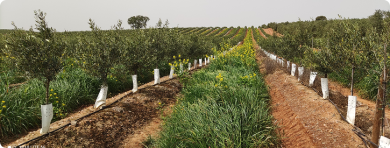
Despite the broad interest of the scientific and policy community on the WEFe nexus, and the various different methods and tools that have been developed to study the WEFe nexus, many approaches focus on analysing the WEFe nexus without offering tools to develop solutions to the identified problem. Furthermore, existing frameworks, such as those developed under the United Nations Economic Commission for Europe (UNECE) Water Convention or the FAO WEF Nexus Approach tend to focus on the national level.
Frameworks that take a context-sensitive approach seem to be lacking. To address these gaps, the WEFe Framework 2.0 (WEFeF 2.0) has been developed as a practical guide for different types of stakeholders, to collaboratively identify and assess interventions, or solutions, that solve WEFe nexus problems and thereby enhance sustainability at local and regional levels – i.e., reducing water, energy or land use, protecting ecosystems and/or maintaining food production – and develop corresponding implementation pathways.
The focus of the WEFeF 2.0 is on technical and/or organizational interventions, that are implemented at the local level, and that aim to improve the WEFe nexus:

Technical interventions
For example, they include solar irrigation, wastewater reuse, nature-based solutions (NBS), or energy-exporting solar greenhouses.

Organizational interventions
For example, they include payments for ecosystem services or command and control measures.
.svg) One intervention can have multiple impacts
One intervention can have multiple impacts
The use of solar-pumped irrigation systems instead of grid electricity for water pumping can, for example, help farmers reduce greenhouse gas emissions or cope with energy shortages. On the other hand, by reducing energy costs and alleviating constraints of energy availability, solar irrigation can also lead to over-abstraction of surface and groundwater resources and negative impacts on associated ecosystems
The WEFeF 2.0 allows us to identify these positive as well as negative impacts (i.e., trade-offs and synergies) that interventions may have on the WEFe nexus in a given area, and to develop additional policy measures that enable actors to manage and ultimately avoid or reduce these negative side effects.
Quick links
Diagnosing WEFe challenges through scanning, trends, mapping, and boundary check.
Identifying WEFe solutions via co-creation, expert input, or analysis.
Assessing WEFe interventions via desk-based and participatory methods.